|
Back
Rossini’s Early Genius Shines in Pesaro Pesaro
Teatro Rossini
08/12/2026 - & August 15, 18, 20, 2026
Gioachino Rossini: L’occasione fa il ladro
Damiana Mizzi (Berenice), Martiniana Antonie (Ernestina), Dave Monaco (Alberto), Matteo Mancini (Parmenione), Giuseppe Toia (Martino), Manuel Amati (Don Eusebio)
Giulio Zappa (fortepiano), Orchestra Sinfonica G. Rossini, Alessandro Bonato (conductor)
Jean-Pierre Ponnelle (stage direction, sets & costumes), Sonja Frisell (revival stage director), Fabio Rossi (lighting)
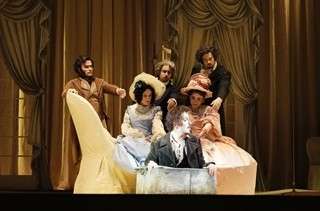
(© Ennevi Foto)
Rossini’s L’occasione fa il ladro, first performed in Venice in 1812, may be one of the composer’s lesser‑known operas, but the performance at the Rossini Opera Festival showed just how much fun this little comedy could provide. Full of mistaken identities, exchanged suitcases and romantic confusion, it was a light‑hearted work that relied on quick pacing, lively ensemble scenes and singers who could act as well as sing. In Pesaro, all these elements came together to highly entertaining effect.
The story was deliberately simple. After a storm, two travellers accidentally exchanged their suitcases. Don Parmenione found Count Alberto’s belongings and decided to take advantage of the situation by pretending to be Alberto, hoping to win the beautiful Berenice. Berenice, however, had her own plans and disguised herself to find out what her supposed fiancé was really like. The result was a series of misunderstandings, disguises and comic confrontations before everything was finally sorted out.
The production was the famous staging by Jean‑Pierre Ponnelle, first presented in Pesaro in 1987. Nearly forty years later, it still worked remarkably well. Rather than trying to turn the opera into something more serious or complicated than it was, Ponnelle simply brought out its comedy. The painted scenery, theatrical tricks and visible stage machinery created a charming old‑fashioned world in which the singers could concentrate on the characters and the music.
Sonja Frisell’s revival of Ponnelle’s production kept the staging lively and fast‑moving. The singers clearly enjoyed being on stage, and their enthusiasm was contagious. There was a real sense of teamwork, with each performer reacting naturally to the others. This was especially important in Rossini, whose ensemble scenes depend as much on timing and interaction as on vocal technique.
Alessandro Bonato conducted the Rossini Symphony Orchestra with energy and affection. He kept the music moving without making it feel rushed and gave the singers plenty of room to shape their phrases. The orchestra provided a bright and elegant accompaniment, while the recitatives, supported by fortepiano and cello, helped maintain the quick theatrical pace.
The young cast was one of the evening’s greatest strengths. Dave Monaco made a particularly strong impression as Count Alberto. His attractive tenor, secure upper register and confident coloratura were matched by excellent comic acting. He brought both charm and energy to the role and showed why he is a singer worth watching.
Damiana Mizzi was an appealing Berenice, combining a clear, flexible soprano with impressive agility. Her singing was precise without becoming mechanical, and she also gave the character plenty of personality. Her scenes with Monaco were especially successful, creating a convincing romantic chemistry.
Matteo Mancini was a highly entertaining Don Parmenione. His strong baritone and expressive face made him an immediately engaging comic figure, while his exaggerated self‑confidence provided plenty of laughs. Giuseppe Toia was equally effective as Martino, Parmenione’s clever servant, bringing good comic timing and a warm baritone to the role.
Martiniana Antonie made a lively Ernestina, using her rich mezzo‑soprano and energetic acting to great effect. Manuel Amati completed the cast as Don Eusebio, making the most of a smaller role.
What made the performance particularly enjoyable was the enthusiasm of these young singers. They did not treat the opera as a museum piece. They seemed genuinely to be having fun, and that sense of enjoyment reached the audience. The result was an evening that was light, funny and musically rewarding.
L’occasione fa il ladro may not have the fame of Il barbiere di Siviglia or La Cenerentola, but this performance demonstrated that it deserves to be heard more often. Rossini wrote the work when he was only twenty, yet the score already showed his remarkable instinct for melody, rhythm and comedy. In Pesaro, the combination of Ponnelle’s imaginative staging, Bonato’s lively conducting and an enthusiastic young cast allowed this charming little opera to show exactly why Rossini’s early comedies remain so irresistible.
Wade Ghribi
|
